








Joseph Doherty, Managing Director at recycling company Re-Gen Waste and member of Defra’s Advisory Committee on Packaging, explores whether we are asking too much of the Environment Agency…
If you were a national organisation hitting the headlines for all the wrong reasons, you wouldn’t relish the prospect of a whole slew of extra responsibilities coming your way, would you? But put yourself in the position of the Environment Agency and that’s where you would be.
 You’re accused of holding back infrastructure development with your delays in processing environmental permit applications and modifications – which is ironic given that your former CEO believed that waste exports should cease by 2027 so all waste and recycling took place within our own borders which is why the infrastructure is needed.
You admit that 18% of all waste in England may be illegally managed which is one of the main roles in your remit, with powers to investigate rogue sites and stop illegal or polluting activity, and the ability to gain greater public support if you shut them down quickly and make the polluters pay. But most activity seems to be on permitted sites for minor breaches of their permits and black marks on their CAR records. This is what frustrates the lawful side of the industry – why you choose to nitpick on regulated sites rather than tackle the harder but more damaging issue of illegal sites which blight local communities and take business away from legitimate companies. The Environment Agency reported in 2021 that waste crime costs the English economy more than £900m per year.
The Agency has responsibility for one of the largest data gathering systems in the public realm with the packaging PRN/PERN compliance scheme, but the sector has concerns that the system can be manipulated by its participants for financial gain.
And ahead of you lies the prospect of policing the collection systems for 23.4 million households in England once the TEEP requirements are confirmed.
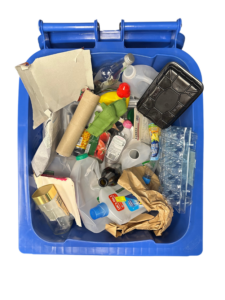 You will also have to manage the staged handover of the packaging waste recovery notes and packaging waste export recovery notes (PRN/PERN) system to the new scheme administrator when business waste collections are added to household collections under the new extended producer responsibility for packaging. PRN/PERN is an imperfect system but underpins the financial viability of so many businesses in our sector: for recyclers, it is key to their buying; for compliance schemes, it is key to their credibility; and for producers it is key to their budgeting. In theory, it should be relatively easy as it should be based on an analysis of the facts and the resulting supply and demand position. But it is a victim of mistakes and intentional acts.
As an example, the publication of the June monthly recycling data was enough to knock £50/tonne off the price of plastic PRNs) in the space of two hours on t2e (the trading portal), a near 20% change that would have had a significant impact on some sellers panicked into thinking the market had collapsed. And all because an operator submitted their data in kgs instead of tonnes. Add to this the number of companies not registering by the deadline, which jumped this year with the consequence of a significant fall in registered producer tonnage – the data that creates PRN demand. The market, therefore, has no idea whether the final position at the end of the year will lead to an oversupply of PRNs or a shortfall.
We live in an imperfect world but there are things we have to get right so the stakeholders can have confidence in the system and its outcomes.
If we are going to give the Environment Agency more responsibility, we have to acknowledge their current resourcing deficiency and rebuild them back up into an effective regulator, to dissuade intentional or criminal activity and build confidence in the sector that we can all operate on a level playing field and we can trust our referee to deal with us fairly and impartially.